Language belongs at home
The Language Access Project is a community-driven initiative working to expand access to American Sign Language, Deaf culture, education, and connection for Deaf and hard-of-hearing children, their families, and the communities surrounding them.
We believe families should never have to search alone for the language, resources, and community their child deserves.
Most Deaf children are born into hearing families
For many parents, their child's diagnosis is also their first introduction to hearing loss, American Sign Language, Deaf culture, educational options, and an entirely new community.
Families can quickly find themselves navigating appointments, terminology, decisions, and resources they never knew they would need.
But there is something they can begin giving their child immediately:
Language.
The Language Access Project exists to make that first step easier.


Communication Shouldn't Have to Wait
Communication Shouldn't Have to Wait
A Deaf or hard-of-hearing child deserves meaningful access to communication from the very beginning.
Our goal isn't to tell families that there is only one right path.
Hearing aids, cochlear implants, spoken language, American Sign Language, and other communication approaches may all become parts of an individual child's story.
Our focus is simple:
No child should have to wait for access to language.
We want families to have the tools to communicate, connect, advocate, and make informed decisions for their children.
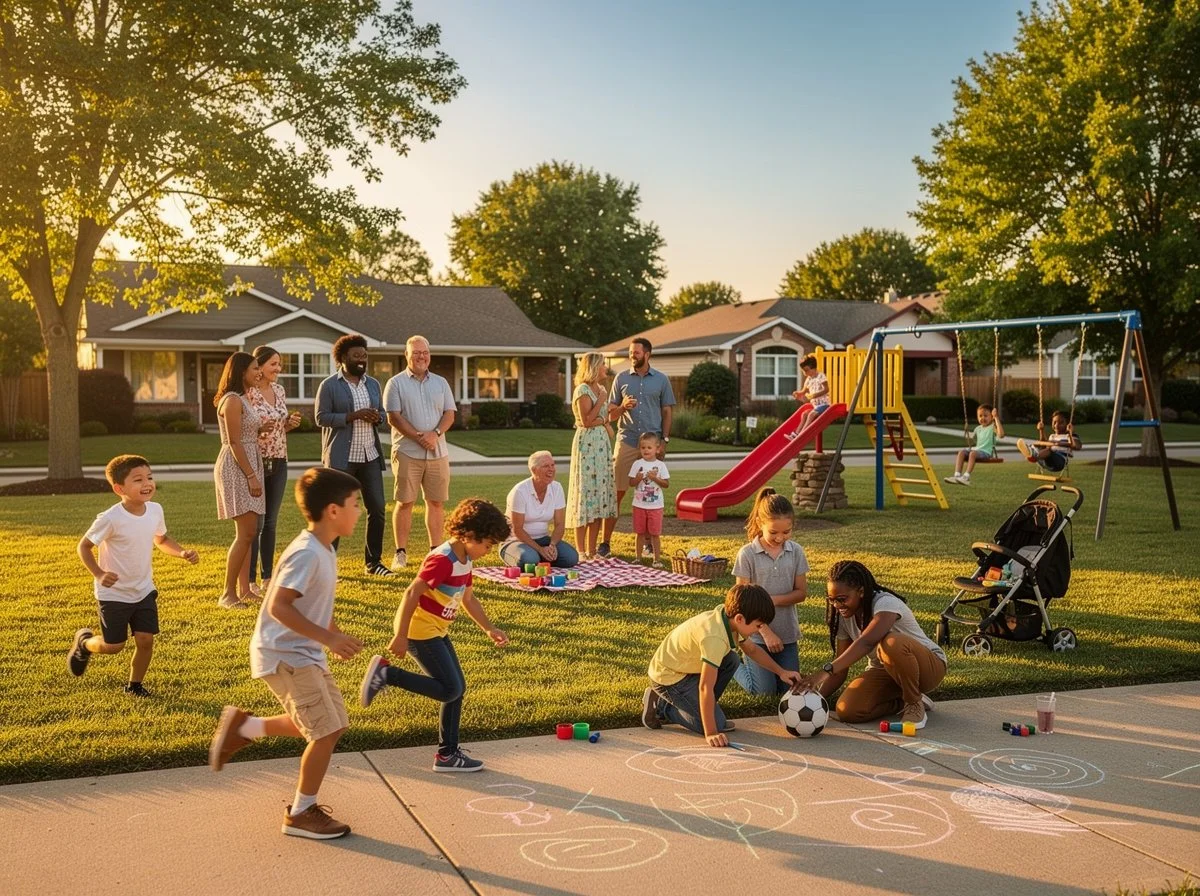
Community-based ASL classes in Bartlett, Tennessee
We are working to create accessible local ASL education for families, caregivers, educators, community members, and anyone who wants to communicate more inclusively.
Classes are designed to include instruction and involvement from Deaf community members, ASL professionals, volunteers, and educators, creating opportunities for both language learning and meaningful cultural connection.
Our classes are open to everyone, with a special commitment to making ASL education accessible to families raising Deaf and hard-of-hearing children.

It’s More Than a Class.
We're building a community.
Learning signs is important.
Having people to sign with is just as important.
The Language Access Project is being built as a place where families can find:
American Sign Language education
Deaf-led learning and cultural connection
Resources for parents and caregivers
Connections with other local families
Community events and opportunities for immersion
Information about Deaf and hard-of-hearing resources
Advocacy and language-access education
A community where Deaf children can grow up seeing people communicate in their language
Who We Are
-
Language first. Community always.
We believe access to language should begin as early as possible—and families should have the support, education, and community they need to make that possible.
Our approach centers American Sign Language, Deaf voices, family education, and meaningful community connection.
We aren't here to tell families that there is only one right path for their child. Deaf and hard-of-hearing children may use ASL, spoken language, hearing technology, or a combination of communication approaches throughout their lives.
What matters to us is that language access doesn't have to wait while families figure everything else out.
We work to bring ASL education closer to home, connect families with members of the Deaf community, provide practical resources, and create spaces where people can learn through real interaction—not simply memorization.
We learn together. We connect families. We center Deaf voices. We build access.
-
Language Access
Every child deserves access to a complete, meaningful language they can understand and use to communicate, connect, learn, and grow.
Deaf Voices at the Center
Programs created to serve Deaf and hard-of-hearing people should include the perspectives, experiences, knowledge, and leadership of Deaf people.
We value Deaf-led education, cultural connection, and authentic involvement from the Deaf community.
Families Without Judgment
Families are often asked to make enormous decisions shortly after learning their child is Deaf or hard of hearing.
We believe they deserve information, resources, and support—not pressure.
There is room here for questions, uncertainty, learning, and different communication journeys.
Community Over Isolation
Families shouldn't have to travel hours, search endlessly online, or navigate everything alone to find ASL education and meaningful support.
We want to create that community closer to home.
Accessibility
Language education should be practical, welcoming, and financially accessible whenever possible.
A family's ability to communicate with their child should not depend on how much money they have, where they live, or whether they already know how to navigate the Deaf and hard-of-hearing resource system.
Connection Before Perfection
You do not have to be fluent to begin communicating.
We encourage families to start signing, keep learning, make mistakes, ask questions, and grow together.
Every sign learned creates another opportunity for connection.
-
It started with one little girl—and a family searching for answers.
The Language Access Project began with our daughter, Rosie.
When Rosie was diagnosed as profoundly Deaf as an infant, our family suddenly entered a world we knew very little about.
There were audiology appointments, specialists, testing, medical terminology, hearing technology, questions about the future—and more decisions than we ever expected to make for such a tiny person.
But underneath all of those questions was one that felt much simpler:
How do we make sure our daughter always has a way to communicate with us?
That question led us to American Sign Language.
And the more we learned, the more we realized how difficult it can be for hearing families to find accessible ASL education, Deaf community connections, and practical resources close to home.
We also began learning something incredibly important:
Rosie didn't need us to wait until we had everything figured out.
She needed us to start learning her language.
So we did.
What began as our family's effort to communicate with our daughter slowly became something bigger.
We connected with ASL educators, members of the Deaf community, other families, professionals, and people who wanted to help. We began asking what it would look like if families in our area didn't have to search so hard for these resources.
What if ASL classes existed right here in our community?
What if parents could meet Deaf adults?
What if families could learn alongside one another?
What if a newly diagnosed family could find a community waiting for them instead of starting from zero?
That became The Language Access Project.
We are still growing. We are still learning. And we are intentionally building this project alongside the Deaf community rather than simply building something for it.
Our hope is that someday, when another family receives a diagnosis like Rosie's, their next step feels a little less overwhelming.
They'll know where to find a class.
They'll know where to find resources.
They'll know where to find Deaf community.
And most importantly, they'll know where to begin.
Because every child deserves to grow up surrounded by people willing to learn how to communicate with them.
For Families Who Are Just Beginning:
You don't have to know what you're doing yet.
Maybe your baby just failed a newborn hearing screening.
Maybe you just heard the words hearing loss, Deaf, hearing aids, or cochlear implant for the first time.
Maybe your child is older and you're only now discovering ASL.
Maybe you've spent hours searching online trying to figure out what comes next.
You are exactly the kind of family we want to reach.
You don't need to know ASL before you walk through the door.
You don't need to have all of the answers.
You just need somewhere to begin.
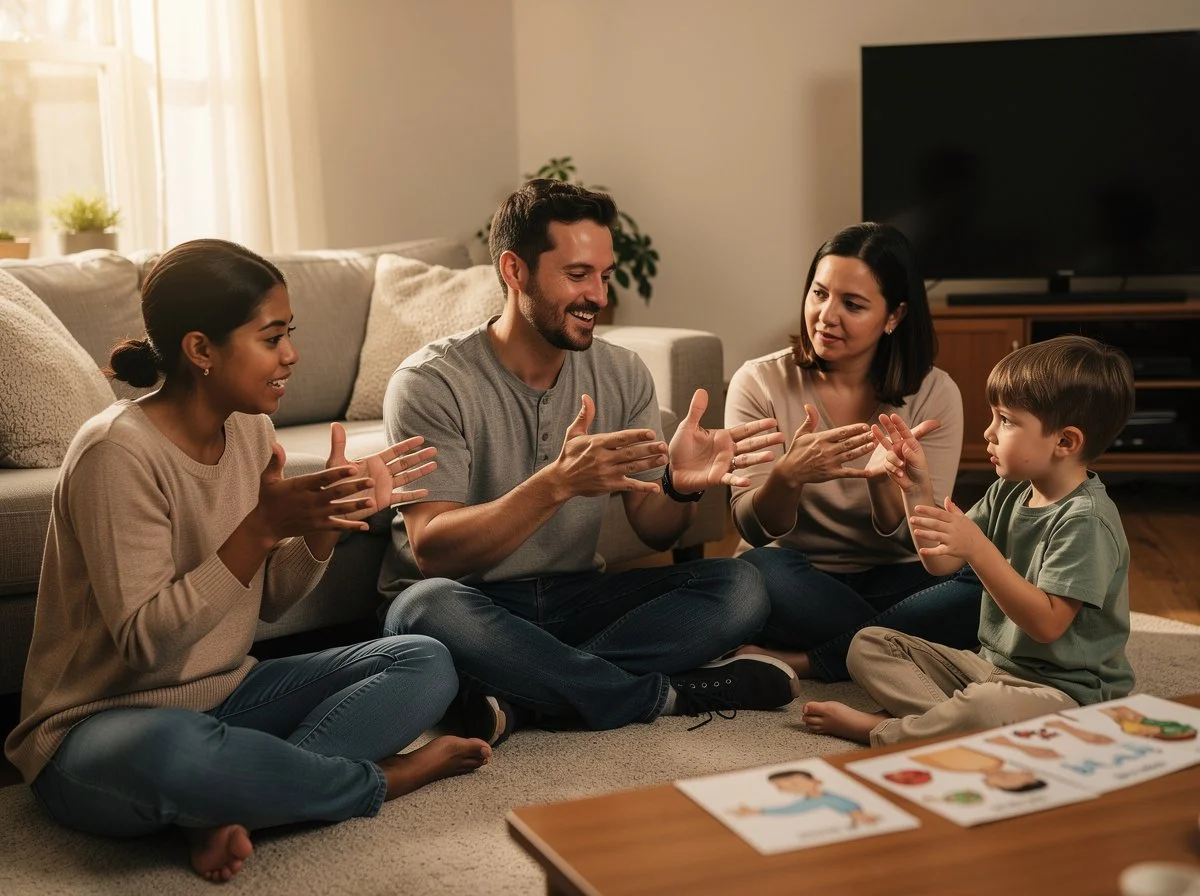
Help us build a bridge by creating language access within our community.
Whether you're a parent, Deaf community member, ASL professional, educator, student, business, church, community organization, or someone who simply believes in what we're building—there is a place for you here. You can: